The New Source of Economic Value for Human Work in the AI Era
Jul 21, 2026How AI Is Turning Intelligence into a Utility and Shifting Economic Value Toward Human Capacities AI Cannot Replicate
Interested in joining the Academy? Click here.
TL;DR
This article explains how AI is restructuring the market value of human work by turning intelligence into a scalable utility. It examines how AI’s industrial infrastructure turns complex cognitive execution into a scalable technological capability, how that shift is repricing specialized expertise, why traditional career paths alone are becoming less reliable as sources of economic security, and why recognizing where economic value is moving is becoming one of the most important human advantages in the AI era.
In This Article
- The shifting market value of human work
- Can AI Replace Your Job? Why Seniority Won't Protect You
- Why Compute Is the Industrial Capacity of the AI Era
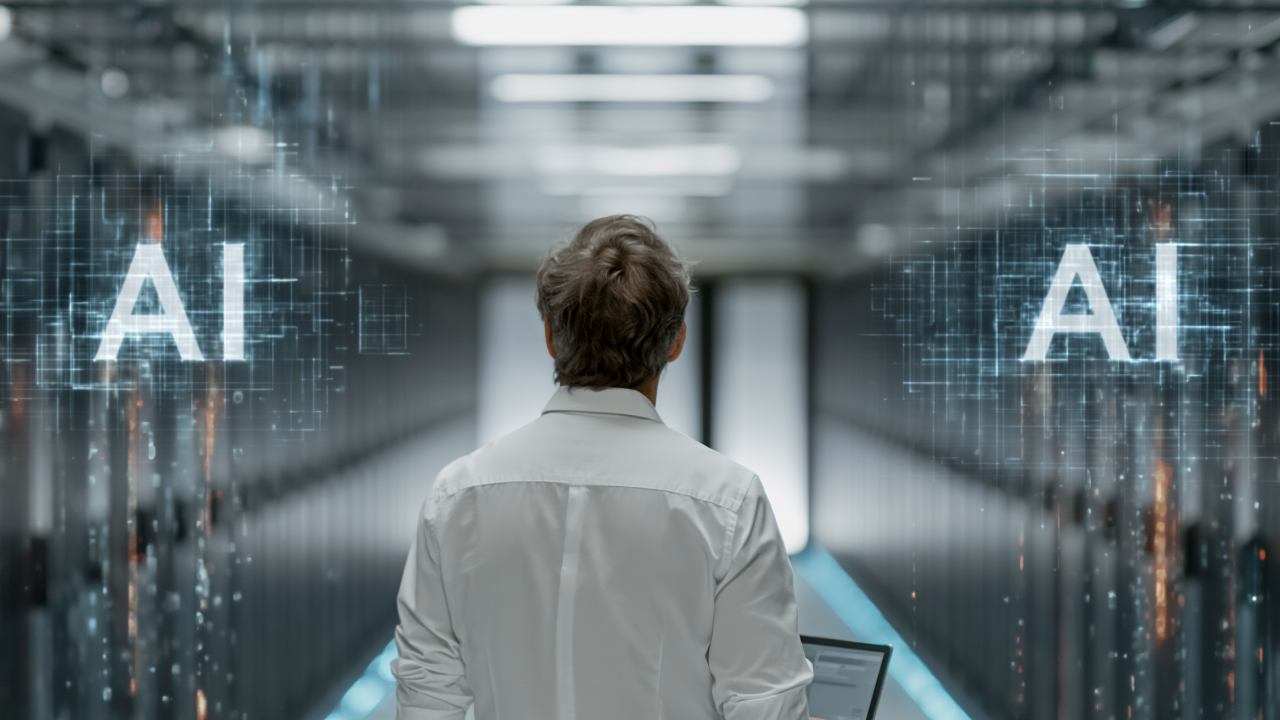
- The New Industrial Era: How Data Centers Became the Factories of AI
- How Industrial Eras Shift the Market Value of Human Work
- When Intelligence Becomes a Utility
- How AI Reprices Expertise and Increases Individual Economic Autonomy
- Why the Old Career Path No Longer Guarantees the Same Payoff
- Where the Market Value of Human Work Is Moving
- The Human Capacities AI Cannot Replicate
The Shifting Market Value of Human Work
The workforce is undergoing a major technological transition as artificial intelligence (AI) systems become increasingly capable of executing advanced forms of work. This shift is driven by the declining cost of cognitive execution as more of it becomes available through scalable technological infrastructure. In this context, cognitive execution refers to the execution layer of knowledge-based work, including processing, coordination, decision-making, and problem-solving that have traditionally depended on human cognitive labor.
This shift is driving a major restructuring of the labor market, commoditizing the execution layer of cognitive work, and fundamentally repricing intelligence. As cognitive execution becomes more technologically scalable, the economy’s dependence on human labor declines. This is already visible in how companies are restructuring, flattening hierarchies, reducing headcount, and concentrating responsibility among smaller teams. This raises an important question: as AI absorbs more of the work people have relied on for income, where is the market value of human work shifting next?
Can AI Replace Your Job? Why Seniority Won't Protect You
One of the most frequent questions asked today is some variation of, “Is my job safe from AI?”
We often assume AI disruption is climbing the organizational ladder, starting with entry-level roles, then moving to middle management, and eventually senior leadership. But that assumption is inaccurate. If you are curious about which jobs AI will replace first, it’s important to understand that job displacement does not necessarily follow the ladder of seniority. The real variable is not seniority, but whether the tasks that make up a role can be computationally executed at the current stage of technological capability, along with the nature and risk of the work, and the regulatory or industry requirements surrounding its use.
A job is not absorbed by AI all at once. It is absorbed in parts, as the tasks that compose it become reproducible through computation. This may show up first in entry-level hiring because many early-career roles are composed more heavily of structured, repeatable tasks. But what AI is absorbing is not hierarchy. It is capability.
OpenAI’s AI Jobs Transition Framework takes a similar task-based approach, analyzing roles by their task composition rather than by job title. The shift does not distinguish between an entry-level associate and a senior executive; nor does it follow the organizational ladder in a straight line.
This inverts the pattern many people assumed AI would follow. Many expected AI to displace the least experienced workers first, but AI can also augment human capability. Across every level of the workforce, a person with stronger judgment, contextual awareness, adaptability, and AI fluency may hold greater economic leverage than someone whose economic value depends mostly on tasks technology can now reproduce.
That is why seniority alone does not protect a role. A senior person whose work is largely composed of computable tasks may face greater disruption than a less experienced person who can adapt to uncertain, unpredictable situations, regardless of their seniority. That is why roles across all levels of the workforce are affected by AI.
Why Compute Is the Industrial Capacity of the AI Era
Skilled execution is increasingly becoming a baseline capability of technology rather than a reflection of individual professional mastery.
The catalyst for this shift is compute.
Compute is no longer merely a technical resource; it is a physical industrial capacity. OpenAI has described access to advanced AI as an emerging foundational utility comparable to electricity, clean water, or food, and its Infrastructure Is Destiny report emphasizes the physical infrastructure required to deploy AI at scale and support economic growth.
While a skill can still require significant effort for a person to master, the growing availability of compute reduces the need for human effort at the point of execution. This turns the capability to perform the task into a scalable technological utility that can deliver consistent results across a predictable range of variables. Microsoft’s 2026 Work Trend Index Annual Report describes this shift through the rise of AI agents, which are increasingly absorbing end-to-end task execution and reshaping what employers require from employees.
As AI models capabilities advance, their deployment and economic impact remain constrained by the physical infrastructure required to run them at scale. As that infrastructure expands, so does the capacity to deploy machine execution across more tasks, industries, and contexts.
The New Industrial Era: How Data Centers Became the Factories of AI
Data centers are the factories of the new era, but they do not manufacture "intelligence" directly; they manufacture compute, the raw processing power required to train, run, and deploy AI systems at scale. As demand for computation rises, these data centers are being built at increasing speed and scale, becoming a major driver of new energy demand.
The data center buildout required to support this demand is increasingly shaped by access to energy infrastructure, with some facilities being built at existing power plant sites. Demand for compute is exploding, but the energy infrastructure required to support it cannot expand at the same speed. Expanding the electrical grid or laying new natural gas pipelines can take years to permit and build. And not every developer can build a data center at a power plant site; many projects face long waits for grid connections, transmission upgrades, substations, and new generation capacity. That is why companies and investors are looking across the energy stack, from natural gas and grid upgrades to nuclear power, as they try to secure the electricity required for AI deployment.
In this transition, energy has become the ultimate limiting factor in expanding computational power, which in turn limits how quickly AI capability can be deployed at industrial scale. The scale of this buildout matters because it shows that computational execution is no longer just a software-based capability. It's becoming a physical industrial system built to carry out complex cognitive execution at massive scale.
The magnitude of this shift is most visible in the numbers:
The Spectrum: Data centers being built today range from small 5-megawatt regional edge nodes to massive 1,000-megawatt (1-gigawatt) industrial "AI Factories."
The Reference Point: In the United States, a continuous 1-megawatt power demand is roughly equivalent to the average electricity use of 750 to 1,000 U.S. homes.
The Scale: This means a 1-gigawatt data center campus operating near full capacity would consume as much electricity as 750,000 to 1,000,000 homes, roughly the same power requirement as the entire city of San Francisco.
Across the country, interconnection queues now represent thousands of gigawatts of proposed new capacity, and the only way to skip the wait is to “park” the data center right at the source.
The amount of capital being invested and the infrastructure being built show that we have entered a new industrial era. Earlier industrial eras built infrastructure to move goods, power machines, transmit information, and scale production. This era is building the physical foundation required to scale compute, the industrial base powering increasingly capable AI systems.
How Industrial Eras Shift the Market Value of Human Work
Technological transitions don't just change the tools we use; they change which forms of human contribution the market values most. The execution layer refers to the part of work where knowledge, skill, or intelligence is converted into action, deliverables, decisions, services, or implementation. This is not the first time the market has undergone a fundamental repricing of human work.
| Era | The Execution Layer (The Commodity) |
The New Value Layer (The Human Edge) |
|---|---|---|
| 1st: Mechanization | Manual Labor: Powering production with human or animal muscle. | Technical Skill: Operating, maintaining, and coordinating the machines. |
| 2nd: Mass Production | Technical Skill: The machine operation and coordination from Era 1 is now standardized through assembly lines. | Operational Logic: Designing the systems, workflows, and efficiency of the whole plant. |
| 3rd: Digital | Operational Logic: The systems and workflows from Era 2 are now automated by software and ERPs. | Contextual Synthesis: Finding, analyzing, and connecting the dots of the resulting data. |
| 4th: AI / Intelligence | Contextual Synthesis: The dot-connecting and data analysis from Era 3 become increasingly commoditized by AI. | Strategic Intent: Value recognition, problem framing, and value creation. |
While these eras overlap in practice, market pressure consistently pulls the execution layer toward technology, forcing human value to migrate upstream.
Each transition follows the same logic: a layer of execution that once defined the market value of human work becomes a standardized capability of technology, and demand shifts toward the next layer of human contribution. We are now in the fourth cycle of that pattern, and it is unfolding faster than the three that came before it.
When Intelligence Becomes a Utility
The AI transition marks a major decoupling. For the first time, certain forms of intelligence can be accessed, deployed, and used to execute work without hiring a person. Intelligence that once had to be accessed through an individual is becoming available as a digital utility, allowing certain forms of work to be executed through a model rather than performed by a person.
In AI’s Use of Knowledge in Society, the authors argue that AI can change how decision rights are allocated across society as more knowledge becomes codifiable, transferable, and easier to process at scale. As more people and institutions gain access to these capabilities, the AI industrial era is not only shifting economic value toward the next layer of human contribution; it is also simplifying the execution of increasingly complex work as the underlying knowledge becomes codified and processed at scale.
This decoupling reveals something fundamental. Much of what the market has valued as intelligence has been tied to task execution. But this also reveals something deeper. Intelligence is not reducible to the performance of a task. A machine can execute a task, but the understanding that makes that possible originated in human intelligence. This distinction is crucial because what the market has long valued as intelligence is not intelligence in its fullest form, but the standardized execution of it.
How AI Reprices Expertise and Increases Individual Economic Autonomy
Historically, human intelligence and execution were bundled exclusively inside biological brains. Because only humans could supply both, the cognitive capacity required to perform the work and the result it produced were inseparable; the market priced them as one.
This created a market where earning potential was shaped by the scarcity of specialized human execution. Because high-value results required years of learning, training, and accumulated experience, the inherent complexity of the work acted as a barrier to entry. This barrier limited the number of people who could perform the task, which in turn supported a higher market value. For centuries, the more specialized the execution, the scarcer the talent, and the more competitive the pay.
We saw the peak of this logic in the early 2010s, when the market was "starved for talent." At that time, the technical difficulty of building software was so high that qualified engineers could rack up dozens of high-paying offers. The market was paying for the scarcity of people who had the technical skill and experience to execute a complex task.
Experience-based expertise is the value built through accumulated knowledge, practical application, and field-specific experience. That scarcity is fading as technology absorbs the execution of specialized work as a baseline capability. This absorption is possible because much of what appears to require extensive experience is built from recognizable patterns, repeatable decisions, and known operations that can be modeled at scale. This is why AI exposure is no longer limited to routine tasks; it is reaching specialized knowledge work across industries. The Upjohn Institute’s AI Exposure and the Future of Work finds that the jobs most exposed to AI are clustered in white-collar, higher-education roles, including analysts, engineers, and professional service providers.
AI systems do not just follow static rules. They are trained on vast datasets, recognize complex patterns, and apply known operations across changing conditions. This allows them to navigate a growing range of complex, real-world problems by recombining, sequencing, and adjusting known operations to fit context-specific situations. Once enough of that execution logic can be modeled, AI moves beyond fixed rule-following and begins adapting execution to context-specific cases.
Research on Artificial Intelligence in the Knowledge Economy describes the AI era as a shift in which previously non-codifiable cognitive work can increasingly be automated through AI systems. In practice, this means technology is beginning to absorb some of the complexity that once required human improvisation. As compute continues to scale, this industrial trajectory is rapidly closing the reliability gap, turning experience-based execution into a scalable capability of machine intelligence.
As machines absorb more specialized work, the market demand for experience-based human execution declines. Specialized knowledge still matters, but it no longer sets human expertise apart in the same way when computational systems can recognize patterns, execute known operations, predict outcomes, and perform more of that work at scale.
This is one way AI is restructuring the workforce. Companies are becoming less dependent on headcount to generate economic value. Work that once required larger teams, specialized departments, or layers of human coordination can increasingly be carried out by smaller teams as AI becomes integrated into company infrastructure, allowing companies to produce the same or greater economic value with fewer people. We examine how this restructuring changes where the capability required to perform work resides, and what that means for workers, in Restructuring Around AI: What It Means for Workers.
This does not mean human expertise has no value. It means experience-based expertise loses pricing power when its execution layer becomes reproducible by technology. The same shift that lets companies do more with fewer people also unlocks new economic autonomy for individuals. A single human working with AI can operate with the capacity of a larger team, lowering the barrier for one person to become self-sufficient, build, and create economic value independently.
Why the Old Career Path No Longer Guarantees the Same Payoff
As AI continues to advance rapidly, it is important to remember that previous industrial transitions show that technology does not simply eliminate work; it reprices the forms of work it can absorb and shifts economic value toward the next layer of human contribution.
What makes this transition challenging is not only the threat of job displacement, although that is significant, but also the growing gap between the kind of work people expected to rely on for income and where the market value of that work is heading. For generations, the old assumption was that a person could earn a degree, secure a stable role, build specialized experience, and rely on performing that work for economic security throughout their working life. But in the AI era, as technology absorbs more of the execution of that work, that path no longer guarantees the same payoff.
The issue is not only that the market value of work is changing; the issue is that many people still depend on forms of work that are losing economic value as their primary source of income, relevance, and direction. International Monetary Fund research estimates that AI may affect around 40% of jobs globally and around 60% of jobs in advanced economies. As AI exposure spreads through the labor market, key tasks currently performed by people may be executed by AI, which could lower labor demand, wages, and hiring.
Adapting to industrial transitions has never been easy. The shift from physical and mechanical labor to clerical and administrative work was disruptive for each generation that lived through it. But what sets the AI transition apart is that it is now moving into knowledge-based professional work too, and it is doing so at a pace that people, institutions, and career pathways are struggling to restructure around. This creates growing uncertainty around future relevance, career direction, and where the market value of human work is moving next.
The scale of this transition is why initiatives like Google’s AI Opportunity Agenda emphasize AI workforce readiness and broad access to AI skills, including support for workers and communities adapting to AI-driven changes in the labor market. Moving with this change requires more than learning how to use AI tools. It also means understanding how AI is changing the market value of work and where economic value is moving.
Where the Market Value of Human Work Is Moving
Prior industrial transitions displaced one layer of human execution and pushed economic value toward another, more complex layer of human execution. But the AI industrial era breaks that pattern. Economic value is no longer simply shifting from one execution layer to the next. It is beginning to move beyond cognitive execution as the default source of economic security.
AI is now absorbing complex cognitive execution, reaching the final layer of execution that technology had not yet fully absorbed. This does not make cognitive execution irrelevant. It means more of it can now be carried out through technology, reducing the market’s dependence on the human labor, training, and availability required to perform it.
That absorption is still unfolding. AI is not yet replacing entire organizational workflows, but it is already absorbing layers of work and expanding the output one person or team can produce. What matters is not only what AI can perform today, but also where the technology is heading as models, agents, infrastructure, and enterprise integration continue to advance. The trajectory is clear. As complex cognitive execution becomes a commoditized technological capability, and as that capability continues to improve rapidly, the remaining forms of execution may still hold value, but they become less reliable as long-term sources of financial security because their economic value depends on how quickly technology can absorb them.
Prediction, Judgment and Complexity argues that AI is best understood as a prediction technology and that, as prediction improves more of the decision-making embedded within cognitive work becomes automatable. As machine prediction becomes cheaper and more scalable, more of the “doing” inside cognitive work becomes exposed to technological absorption.
This is why the AI transition cannot be understood only through the visible changes it produces. For workers, those changes may appear as growing job insecurity or declining financial security. For employers, they may appear as organizational restructuring that drives efficiency gains and lower execution costs. But those outcomes point to a much deeper shift.
AI represents a major technological and intelligence gain for the world by turning increasingly complex cognitive execution into a scalable technological capability. As that execution becomes commoditized, economic value shifts toward forms of human intelligence that cannot be reduced to execution alone. We examine how this shift raises the bar for professional skills, judgment, and human expertise in How AI Is Raising the Bar for Professional Skills and Human Expertise.
The Human Capacities AI Cannot Replicate
The human capacities gaining greater value in this transition are not necessarily the ones the market has historically rewarded most. For generations, the market placed substantial value on the knowledge and capabilities required to perform work because execution depended on human labor. But as technology absorbs more of that execution, distinctly human capacities of intelligence become increasingly economically important.
Much of the public conversation is still centered on machine intelligence: what AI can do, which jobs it may replace, and how quickly its capabilities are advancing. The irony is that the rise of machine intelligence is not only absorbing forms of work that once depended on human execution. It is also revealing which human capacities become more valuable as technology absorbs more work.
We are witnessing a major repricing of intelligence, as the market assigns greater value to human capacities that machines cannot generate.
This is one reason smaller, highly leveraged companies are on the rise. Zoom’s 2026 solopreneurship research points to a U.S. solopreneur economy of nearly 30 million non-employer businesses and finds that 74% of solopreneurs have been able to scale their businesses without hiring. AI allows fewer people to execute more, which means the advantage no longer belongs only to the person who knows how to do the work. It increasingly belongs to the person who can recognize what is worth building and use technology to execute it, rather than depending on execution alone to generate economic value.
As AI continues to absorb work, knowledge-based execution alone is becoming less sufficient as a primary source of economic value. Greater value is shifting toward the distinctly human capacity to perceive forms of value that computation alone cannot generate.
This includes recognizing what is no longer working, perceiving what could work better, and moving toward more intelligent solutions. Research on human-AI complementarity, which is the idea that people and AI contribute different strengths, points to a similar shift. Integrating human intuition and contextual understanding with AI’s analytical power can lead to better decision-making, while ethical judgment and leadership remain especially important as AI expands across work.
This is where human intuition becomes relevant, not as a vague instinct or a mystical concept, but as a human capacity that plays a critical role in intelligence. It allows a person to recognize what they are perceiving, interpret its significance, and trust that awareness to move beyond predefined paths and in a more intelligent direction.
This capacity helps explain why some people adapt while others continue along the same trajectory as the work attached to it becomes less reliable as a source of economic security. Those who adapt recognize the shift, trust what they are perceiving, and begin adjusting. Others either fail to recognize the shift or hesitate to trust their perception of it. They continue seeking security through the same structures and strategies that no longer provide sufficient leverage on their own.
The strategies that once led more predictably to economic security, such as another credential, another technical skill, or another established career path, are still useful. But they are no longer sufficient on their own in a market where AI is increasingly absorbing the very work those paths depend on.
The market value of human work is being shaped less and less by what technology has not yet absorbed and more by the human capacities required to recognize where economic value is moving.
Adapting to the AI industrial shift requires more than learning how to use the next tool. It requires moving beyond execution as the primary source of economic value and developing the capacity to recognize and move toward forms of value technology cannot simply generate.
Economic value is moving beyond the work AI has not yet absorbed and toward the human capacities AI cannot generate.
Understanding human intuition, and how it helps you recognize where value is moving, starts here.
Ready to begin?
→ Explore the Intuitive Advantage